what is a natural way to bring up low sodium levels
Fact Checked
This Dr. Axe content is medically reviewed or fact checked to ensure factually accurate information.
With strict editorial sourcing guidelines, we just link to bookish research institutions, reputable media sites and, when inquiry is available, medically peer-reviewed studies. Note that the numbers in parentheses (1, 2, etc.) are clickable links to these studies.
The information in our manufactures is Not intended to supplant a one-on-one relationship with a qualified health intendance professional and is non intended as medical advice.
This article is based on scientific show, written by experts and fact checked by our trained editorial staff. Note that the numbers in parentheses (1, two, etc.) are clickable links to medically peer-reviewed studies.
Our team includes licensed nutritionists and dietitians, certified health education specialists, as well every bit certified force and conditioning specialists, personal trainers and cosmetic exercise specialists. Our squad aims to exist not but thorough with its research, simply also objective and unbiased.
The information in our articles is NOT intended to supplant a i-on-1 human relationship with a qualified health care professional person and is not intended equally medical advice.
Hyponatremia Causes & Symptoms + v Natural Treatments
March 31, 2017
Hyponatremia means low sodium levels in the claret. It'southward the reverse of the condition chosenhypernatremia, in which sodium levels are very high. Both atmospheric condition often occur when patients are staying in the hospital. This is particularly true if they are receiving fluid intravenously, have an existing condition like kidney or heart disease, or are in critical care.
Surveys take establish that hyponatremia develops in 15-xxx percent of all patients during hospital stays. (1) Hyponatremia and related electrolyte imbalances can develop during exercise or in extreme heat, when dehydration symptoms are more than common. When hyponatremia is mild, or sometimes, even moderate, it'south commonly asymptomatic. This ways no noticeable symptoms occur that the patient is aware of. However, when information technology'southward more than severe, hyponatremia symptoms typically include headaches, nausea and in some cases fifty-fifty seizures or a blackout.
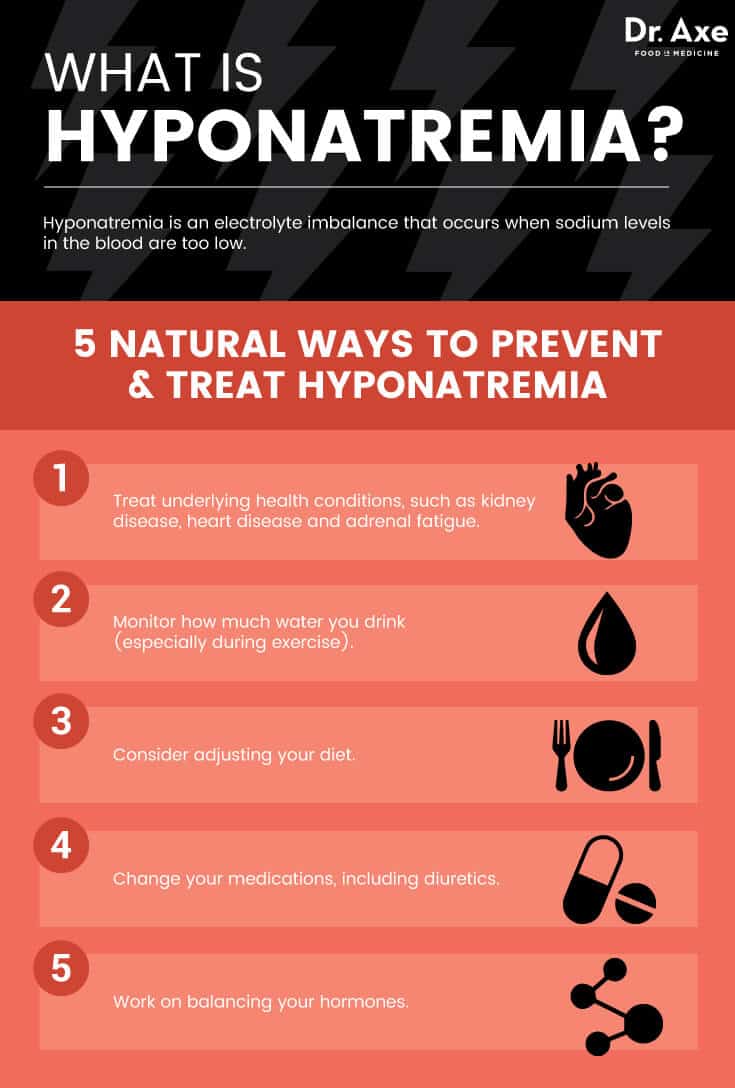
Treatment for hyponatremia normally comes downward to regulating fluid levels in the body. In other words, intake and excretion of salt versus h2o must be balanced. Ways you tin forestall hyponatremia from developing, or reverse the condition in one case it'due south already occurred, include:
- drinking the right amount of water in proportion to how much sodium you're losing
- eating a counterbalanced diet
- taking care of your adrenal glands
- making an effort to balance hormone levels
What Is Hyponatremia?
Hyponatremia is a type of electrolyte imbalance characterized by having abnormally low sodium levels in the blood. Sodium (salt) often gets a bad rap considering besides much of it affects blood pressure and contributes to fluid retention/swelling. Notwithstanding, information technology's actually an essential electrolyte. All electrolytes take important jobs throughout the body. This is because of how they carry an electric charge when dissolved in bodily fluids, including blood. (2) Some of the roles that sodium has include:
- Helping to regulate the amount of water that'southward in and effectually your cells.
- Controlling blood volume.
- Regulating blood pressure.
- Assuasive your muscles and nerves to work properly.
What is considered low sodium, versus normal sodium? (3)
- Normal sodium levels are: 135-145 mEq/Fifty.
- Hyponatremia is defined every bit a serum sodium level of less than 135 mEq/Fifty.
- Mild hyponatremia is between: 130-134 mmol/L.
- Moderate is between: 125-129 mmol/L.
- And severe is: anything less than 125 mmol/L.
The physician will adjust fluids to right the imbalance, depending on if a patient has hyponatremia (too little salt in their blood) or hypernatremia (likewise much salt), . To preclude electrolyte imbalances, you tin monitor your water intake, diet and medications. Normally your body obtains sodium through your diet and loses the right amount through your urine or sweat. So, equally long every bit you don't have kidney problems, y'all should exist able to naturally residuum sodium and water levels past making a few good for you changes.
Common Signs and Symptoms of Hyponatremia
The problem with having too little sodium, and, at the same fourth dimension, too much water, is that information technology causes your cells to smashing. Depending on how much swelling and fluid retention occurs, hyponatremia tin can be very serious — even deadly in severe cases.
The virtually common hyponatremia symptoms include: (4)
- Digestive issues similar nausea, diarrhea and vomiting
- Headaches
- Dizziness and instability
- Muscle weakness
- Trouble concentrating and confusion
- Low energy, languor, even if you've slept plenty, and fatigue
- Mood changes and increased irritability
- Muscle pains, spasms or cramps
- In severe cases when the condition isn't treated, encephalon swelling, seizures and possibly coma or death can occur
- In the elderly, hyponatremia can also crusade falls, injuries and gait disturbances due to instability and weakness
HyponatremiaCauses and Chance Factors
Hyponatremia happens when sodium levels in your body become as well diluted; too much water is present in the blood in proportion to sodium. Hyponatremia symptoms and complications are caused by cells bloated with water, which causes fluid memory. This can even pb to serious neurologic impairments and fluid retention in the brain (brain edema).
Hyponatremia is categorized into several categories/types depending on how claret volume and total fluid levels are impacted. In other words, information technology's categorized depending on the crusade.):
- Euvolemic hyponatremia is when h2o levels increase, lowering the level of sodium based on claret volume.
- Hypovolemic is when blood volume and sodium are both low.
- Hypervolemic is when blood book and sodium are both increased, but sodium is too depression in proportion to water.
- Hyponatremia that develops over 48 hours or longer is considered "chronic hyponatremia." This is ordinarily riskier due to potential complications. It's too harder to treat. However, if it develops very rapidly, it'southward called "acute hyponatremia." Acute hyponatremia tin can be easier to control with treatments like intravenous fluids. (5)
Situations and health conditions that crusade hyponatremia most often include:
- An existing/underlying medical condition that affects sodium levels, your thirst sensation, the role of the kidneys (such as kidney disease which alters urine production), heart or liver bug. Kidney disease and heart disease are common weather that both contribute to hyponatremia.
- Being a premenopausal woman. Premenopausal women appear to be at the greatest gamble of hyponatremia. This is due to how women's sex hormones touch fluid and sodium levels. (6)
- Hormonal imbalances or changes that affect the adrenal glands. The adrenals normally produce hormones that help maintain your body's balance of electrolytes (including sodium, potassium and water). Reasons that hormone production tin can change include adrenal gland insufficiency (Addison'due south disease) and thyroid disorders /damage.
- Chronic, severe vomiting or diarrhea due to an illness. This can cause aridity (taking in as well little electrolytes through foods and fluids).
- Drinking too much water. This tin happen in very hot temperatures, when someone is fasting, or during exercise and endurance sports. Studies evidence people who partake in marathons, ultra-marathons, triathlons and other long-distance, high-intensity activities are at an increased risk of hyponatremia.
- People following restrictive diets that are very high in water and hydrating foods, but depression in sodium (like raw food diets or fruit-only diets).
- Older age. The elderly and older adults develop symptoms of hyponatremia more oft than younger people. This is specially true if they take medications that impact fluid levels, have been staying in the hospital, or are sick.
- Taking medications that modify sodium/water levels. Drugs that can cause or contribute to hyponatremia include thiazide diuretics, antidepressants and pain medications.
- Producing high levels of the anti-diuretic hormone (ADH). This causes your trunk to retain water instead of excreting it normally in your urine.
- Using recreational drugs, including ecstasy.
Conventional Treatment for Hyponatremia
When a patient sees a medico regarding hyponatremia symptoms, or is already staying in the hospital when the condition develops, the healthcare provider will usually look for any indication of electrolyte imbalance past taking several measurements:
- Plasma sodium (corporeality of sodium in the claret)
- Plasma osmolality (osmolality tests provide a snapshot of the concentration of solutes in a given volume of bodily fluid, in this case the corporeality of h2o and sodium nowadays in the blood/serum)
- Urine sodium (how much sodium the body is excreting in urine)
- Urine osmolality (concentration of solutes in the urine)
- Assessment of the patient's symptoms or signs that represent an electrolyte imbalance, similar nausea, vomiting, dizziness or diarrhea.
Once your medico diagnoses you lot with hyponatremia, he or she physician might decide to restore normal fluid levels by giving you intravenous fluids or medications. These will depend on what type of hyponatremia yous have and how it impacts your full claret volume. The goal of fluids and medications is to enhance sodium levels/low water retentiveness.
Typical treatment for hypovolemic hyponatremia is administering saline solutions to bring up sodium levels. If water levels in the blood are too high (euvolemic hyponatremia), then water/fluid restriction will be prescribed for a menses of time. Sometimes, in addition to reducing water intake and increasing sodium, you besides may need to take diuretics (which increment urination). When hyponatremia is severe and brain damage is possible, effectually 3 per centum sodium solution is usually administered to control complications.
Prevention Tips & 5 Natural Treatments for Hyponatremia
1. Treat Underlying Health Weather
Kidney dysfunction, kidney disease, liver disease or damage , thyroid disorders, adrenal fatigue and center disease can all increase your risk for hyponatremia, so information technology's important to care for these underlying conditions. If you take any of these health problems, be certain to monitor your symptoms closely, eat a good for you diet, and speak to your doctor most means to control fluid levels so that too much fluid/h2o does not accumulate in your body. Anyone with these conditions needs to exist especially conscientious not to dilute the amount of sodium in their body too much through medications, intense exercise, diarrhea or vomiting , etc.
Because your adrenal glands produce hormones that control fluid levels in your body, improving adrenal health is an important step in preventing symptoms due to electrolyte imbalances. Dietary steps you lot tin can take to have care of your adrenals include eating more fresh veggies and fruits, foods high in B vitamins (similar fish or eggs), mushrooms, coconut oil/coconut milk and seaweed. Reducing stress, getting enough rest and sleep , plus exercising in a salubrious way (not also much or as well little) can likewise keep your adrenals working properly.
2. Monitor How Much Water You Drink (Especially During Exercise)
While drinking enough water is by and large very important for numerous bodily functions, drinking too much (particularly within a brusque period of time) is besides possible. Drinking too much h2o volition dilute the corporeality of sodium in your claret in proportion to water, triggering the symptoms described above. You might too lose some sodium through sweat if you're intensely exercising when hyponatremia develops, such as when completing a marathon.
When you're active, you might think it'due south all-time to keep drinking equally much water as possible in club to stay hydrated. If you're losing lots of electrolytes through your sweat, what y'all actually might need is a sports drink or beverage that supplies sodium (in add-on to other electrolytes).
Try to beverage only equally much fluid as y'all are thirsty for and are losing due to to sweating. A good rule of thumb is to drink 8-10 ounces of water xv minutes before you begin working out, so during your workout drinkable another viii ounces every 15 minutes. (vii) Some other good way to know if y'all're drinking about the right amount of water during the mean solar day (fifty-fifty you lot're not active) is to check the color of your urine: you're looking for a pale yellowish color as often as possible, as opposed to clear or very nighttime.
3. Consider Adjusting Your Diet
If yous swallow very loftier amounts of hydrating foods plus water, but non enough natural body of water salt or sodium, it can help to make some changes. The primary way that we obtain sodium is from consuming information technology through our diet in the form of sodium chloride, or table salt. Today the average person gets more than than 75 percent of their sodium from processed foods, including low-quality meat products, frozen dinners, condiments, canned goods, fried or fast foods, etc. Some names that sodium goes by in these processed foods include: monosodium glutamate (MSG), sodium nitrite, sodium saccharin, baking soda (sodium bicarbonate) and sodium benzoate.
Rather than getting enough sodium from these unhealthy foods, endeavour adding real body of water salt to your meals that you make yourself at abode— this fashion you can command the amount of salt you're taking in (plus y'all'll get many more than benefits due to obtaining numerous minerals if you lot use real sea common salt). Some healthy foods also naturally provide smaller amounts of sodium, including meat, milk, beets, and celery. (eight)
One teaspoon (v milliliters) of table salt/sea salt contains most two,300 milligrams of sodium, and most health authorities recommend that the bulk of adults who don't have any heart or kidney problems should limit their added salt intake to this same corporeality (2,300 milligrams per day if you're salubrious, or no more than i,500 milligrams per day if yous have an existing condition similar heart illness).
4. Change Your Medications, Including Diuretics
If medications such every bit diuretics or antidepressants are contributing to your condition, then your doctor can recommend how to change your dosage in order to increase sodium levels and forestall water retention safely. Although yous should never change medications or end taking them without speaking with your doctor kickoff, you might be able to aid treat conditions like bloating, anxiety and low using natural remedies similar a healthy diet, essential oils, exercise, stress reduction and sure supplements.
5. Work on Balancing Your Hormones
If yous're currently meaning, going through menopause, or experiencing other hormonal changes, this may be i reason you're experiencing swelling, fatigue, mood changes, etc. due to electrolyte changes. Premenopausal women appear to exist at the greatest take a chance of hyponatremia due to how women's sex hormones affect fluid and sodium levels. Those with stressed adrenal glands are also an increased take chances.
Once you lot've ruled out disorders like adrenal gland insufficiency (Addison's illness) and thyroid disorders/damage, piece of work on balancing your hormones naturally through exercise, stress-reducing practices (like yoga, deep breathing or meditation), eating a nutrient-dense diet, using hormone-balancing essential oils, and possibly taking herbs/supplements that can assist.
Precautions When TreatingHyponatremia
If you have mild symptoms, similar some muscular weakness or headaches, after intense exercising or spending fourth dimension in loftier temperatures/humidity, there's probably no need to encounter a doc. But, if you lot suddenly have unexplained symptoms that indicate an electrolyte residue, specially later on high-intensity activities, or if you have conditions like depression blood pressure and/or diabetes, then visit your doctor.
Await out for signs and symptoms of low claret sodium that come up on suddenly. This is important later a infirmary stay, surgery, partaking in a marathon/long-distance race, a bout of dehydration or disease (like a fever). Become to know whatsoever side effects that might occur due to medications y'all take, or from an existing illness. Take precaution if symptoms final for more than one day, getting help correct away to prevent the situation from worsening.
Final Thoughts onHyponatremia
- Hyponatremia is an electrolyte imbalance caused by too little sodium in the body in proportion to water.
- Symptoms like nausea, airsickness, loss of appetite, headaches, weakness, fatigue and defoliation characterize hyponatremia. Complications in severe cases can include encephalon damage due to swelling; falls; seizures and coma.
- Treatments for hyponatremia include: drinking the right amount of water in proportion to how much sodium you lot're losing, managing underlying health conditions, eating a balanced nutrition, taking care of your adrenal glands, and balancing your hormone levels.
Read Next: Musculus Ache Treatments, Causes & Remedies
Source: https://draxe.com/health/hyponatremia/
0 Response to "what is a natural way to bring up low sodium levels"
Post a Comment